
REVIEW · CULTURAL VILLAGE TOURS
Lesedi Cultural Village with lunch or dinner cultural food
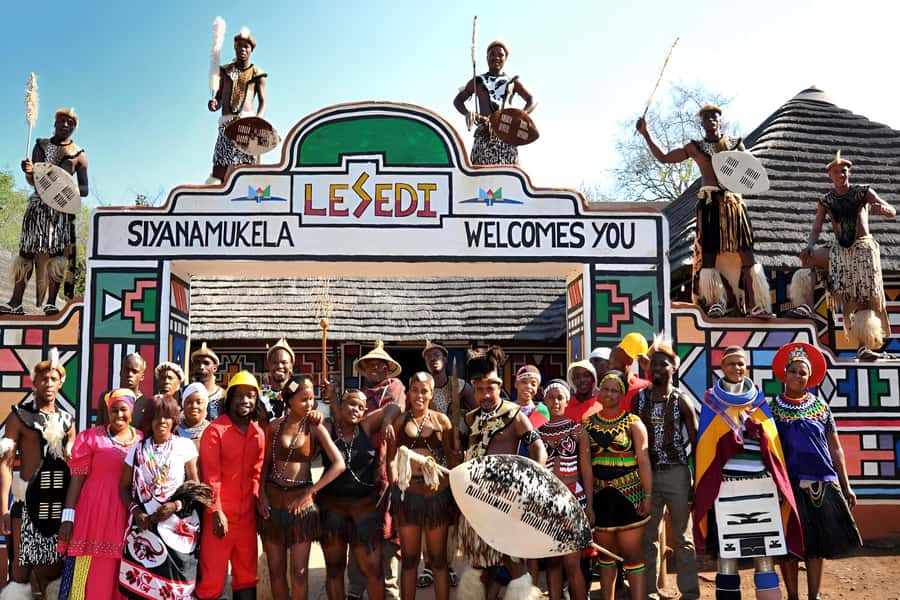
Culture comes alive through music here. Lesedi Cultural Village gives you a lively introduction to five South African groups, with traditional homes, songs, drumming, dance, and a meal built into the five-hour outing. I like the warm musical welcome and the chance to compare Zulu, Xhosa, Pedi, Sotho, and Ndebele traditions in one place. I also like that pickup and drop-off from Johannesburg or Pretoria are included, which removes a fair bit of planning.
The main caution is that this is a staged cultural presentation, not a visit to an ordinary working village. Some scenes are designed for an audience, and one recent visitor felt the displays looked artificial and offered limited learning beyond the visual show. If you want a clear, accessible introduction with plenty of performance, Lesedi works well. If you want quiet observation or a more informal community encounter, you may find it too polished.
In This Review
- Key things to know before you go
- What Lesedi Cultural Village is trying to show
- The 45-minute ride from Johannesburg or Pretoria
- Starting with drums, singing, and a friendly welcome
- Walking through five traditional homesteads
- Crafts, rituals, and the parts that need context
- The dance performance that earns its place
- Lunch or dinner with South African flavors
- Is $143 good value for five hours?
- Who will enjoy this half-day outing?
- Practical details that shape the day
- Should you book Lesedi Cultural Village?
- FAQ
- Where is Lesedi Cultural Village located?
- How long does the experience last?
- Is hotel pickup included?
- How long is the drive to Lesedi Cultural Village?
- Which cultural groups are included?
- Is food included?
- What languages are available?
- Is the tour wheelchair accessible?
- Can I cancel for a full refund?
Key things to know before you go
- Five cultural traditions in one visit: The tour presents Zulu, Xhosa, Pedi, Sotho, and Ndebele homesteads, customs, and performances.
- Music begins at the door: Expect singing, drumming, and dancing from the start, not a slow museum-style introduction.
- Guides make the difference: Samuel received especially strong praise for adding information and helping people connect with extra parts of the experience.
- The dance show is the main event: The performance is widely praised for its energy, skill, and strong visual impact.
- Lunch or dinner is included: The meal helps turn the outing into a half-day cultural program, though drinks and personal purchases cost extra.
- Easy from Johannesburg or Pretoria: Transport takes about 45 minutes each way, with hotel pickup and drop-off around both cities included.
What Lesedi Cultural Village is trying to show
Lesedi Cultural Village is a purpose-built cultural attraction in South Africa’s North West province. Its focus is the variety of traditions among several southern African peoples, especially the Zulu, Xhosa, Pedi, Basotho, and Ndebele.
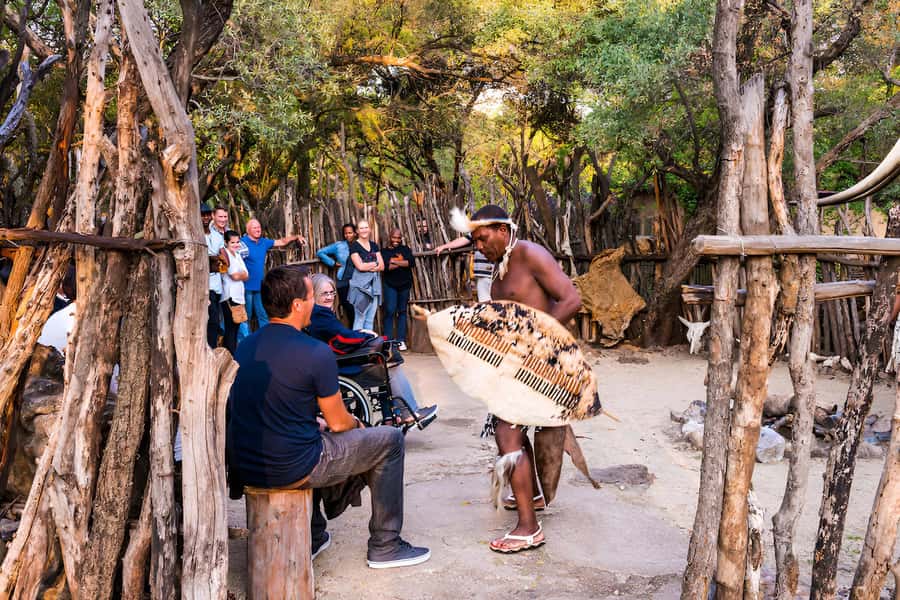
Rather than taking you through one broad exhibition, the visit moves between reconstructed homesteads. Each area gives you a visual sense of how a particular group traditionally organized domestic space, built homes, used materials, and marked important parts of life.
That format is useful if you are new to South African culture. In a single afternoon, you get a framework for noticing differences in clothing, architecture, music, dance, craft, and ceremony. You do not need prior knowledge, and the guides explain the basic ideas as you go.
The tradeoff is clear. This is cultural education presented as theater. Daily activities such as pottery, weaving, beer brewing, and beadwork may be demonstrated, while ceremonies such as weddings, initiation rites, and ancestral practices are explained or acted out. The presentation can make complex traditions easier to understand, but it can also feel arranged for an audience.
I would treat Lesedi as an introduction, not the final word on South African culture. It gives you useful starting points and memorable images. You should also remember that no five-hour program can fully represent the lives and beliefs of five different groups.
More Food Tours in Johannesburg
- Johannesburg: Local Food Tasting Guided Walking Tour
★ 4.7 · 192 reviews - Soweto Food & Beer Bike Tour
★ 4.9 · 40 reviews - Johannesburg: Wine Tasting
★ 4.3 · 39 reviews
The 45-minute ride from Johannesburg or Pretoria
Your day begins with pickup from a location in Johannesburg or Pretoria. Hotel pickup and return are included around both cities, which is a meaningful part of the value. You do not need to arrange a separate taxi, rental car, or connection to the village.
The drive takes about 45 minutes each way by bus or coach. That gives you roughly 90 minutes of road time within a five-hour schedule, leaving about three and a half hours at the attraction for the guided portion and food.
Pickup details matter in Johannesburg and Pretoria, where getting across town can take longer than a map suggests. Check the available start time and pickup instructions carefully before booking. The experience is offered in English, Portuguese, and French, with a live guide.
If you do not speak English comfortably, the language options are a real advantage. A French guide helped one visitor follow the explanations, and another noted that pauses were made for translation. That can make the cultural details easier to follow instead of leaving you with only the pictures and music.
Starting with drums, singing, and a friendly welcome
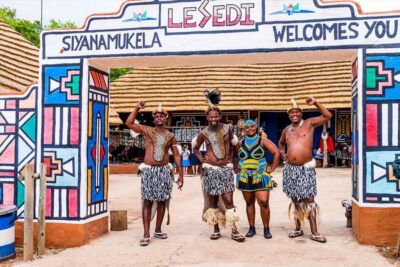
The first impression is deliberately strong. You are greeted with traditional music and dancing, and the opening drumming sets the tone for the rest of the visit.
This is not a quiet arrival where you collect a brochure and wait for a guide. The performers bring you into the mood quickly. The singing and welcome also help break the ice between the group and the people leading the tour.
One useful detail from the experience is the friendly attitude of the staff. The welcome feels personal rather than stiff, and the entertainers are described as very approachable. If you enjoy taking part, you may be invited to follow simple dance movements or join in with the rhythm.
That energy is one of Lesedi’s strongest points. The performers are praised for their stamina, and the dancing is repeatedly singled out as the best part of the program. You should expect a show with repeated movement, percussion, and singing rather than a short ceremonial sample.
The opening is also where the presentation feels most obviously designed for tourists. That is not necessarily a flaw, but it helps to set your expectations. You are attending a cultural performance and guided interpretation, not arriving unnoticed at a village celebration.
Walking through five traditional homesteads
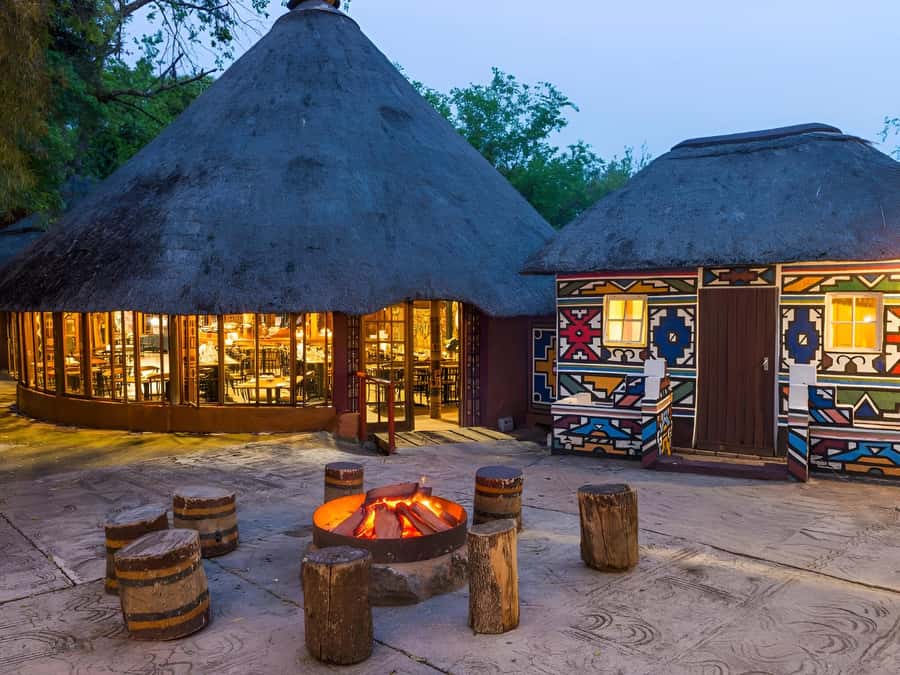
The guided tour lasts about two and a half hours, including visits to the different cultural areas. Guides from the represented groups explain customs, traditions, and daily life as you move through the village.
The homesteads are replicas, so the value comes from comparison. Look at how building materials, courtyards, household spaces, and decorative details are presented. The guide may explain why certain structures matter and how the layout connects to family life or social customs.
The five groups covered are:
- Zulu
- Xhosa
- Pedi
- Basotho, also called Sotho
- Ndebele
The tour presents each group as having its own identity, while also showing shared elements across southern African culture. That balance is important. You will see different styles of dress, homes, songs, and customs, but you should not assume the displays capture every difference or every modern reality.
The Ndebele section may be especially appealing if you enjoy strong visual design and decoration. The Zulu, Xhosa, Pedi, and Sotho areas add variety to the route, with guides explaining distinct customs and practices.
The quality of the experience depends heavily on the person leading your group. Samuel received exceptional praise for adding information, introducing people to extra experiences, and staying attentive throughout the tour. If you are assigned a guide who explains rather than simply moves the group from hut to hut, the visit will feel far more worthwhile.
More cultural village visits:
- Lesedi Cultural Village and Cradle of Humankind Tour
★ 5.0 · 48 reviews - Lesedi Cultural Village Tour
★ 5.0 · 46 reviews - Lesedi Cultural Village
★ 5.0 · 45 reviews - Johannesburg: Lesedi Cultural Village Experience
★ 4.6 · 43 reviews
Crafts, rituals, and the parts that need context
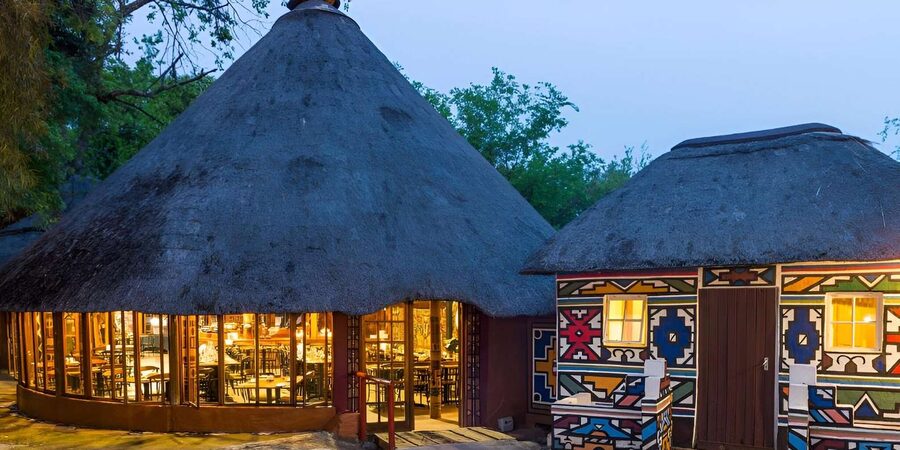
Lesedi includes demonstrations of traditional skills such as pottery-making, weaving, beer brewing, and beadwork. These scenes help turn abstract descriptions into something you can see. A craft demonstration also gives you a better sense of the time and manual skill involved in ordinary household work.
The guides also discuss ceremonies and rituals. These can include weddings, initiation rites, and ancestral worship, with some ideas brought to life through song and dance.
I appreciate this part of the visit because it adds meaning behind the costumes and buildings. Without explanation, a decorated home or dance can become a photo stop. With a guide, you get at least some context about family, community, ceremony, and belief.
Still, this is an area where you should listen carefully and keep an open mind. The program compresses complicated subjects into short explanations. It may present a custom as a clear, finished scene when real practice can vary by family, region, generation, and faith.
One visitor felt that much of the tour was visual and staged, with scenes created to suit a Western audience. That criticism is fair to keep in mind. Lesedi can show you how traditions are presented, but it cannot replace a longer study of South African society or a personal conversation in an everyday setting.
The dance performance that earns its place
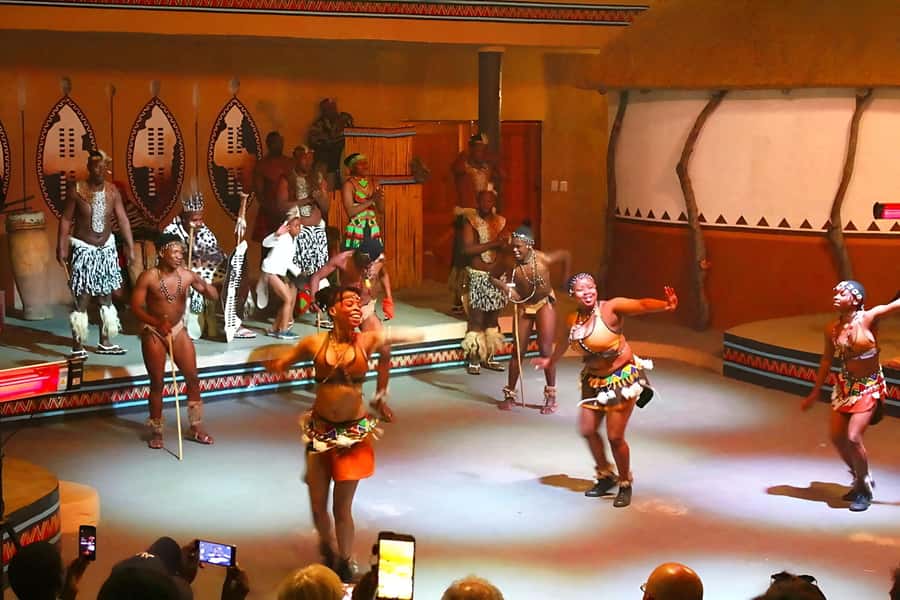
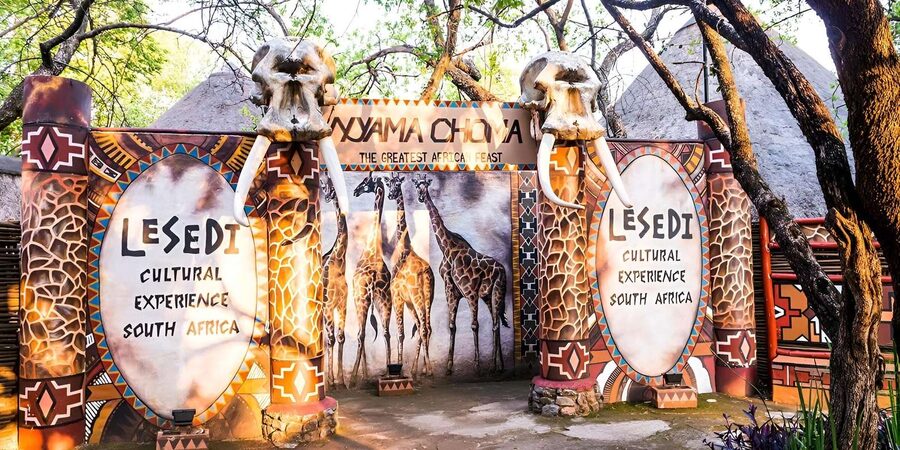
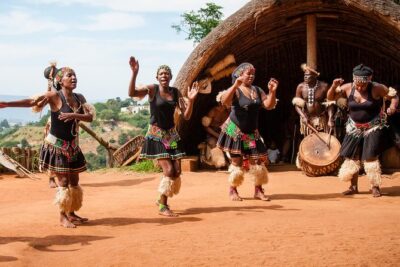
The final cultural show brings together music, singing, drumming, and dance. This is the part I would expect to remember most clearly after the tour.
The dancers are energetic and precise, and the performance has a physical force that photographs cannot capture. The rhythm also gives the program a shared ending, bringing the separate cultural sections together in one celebration.
If you enjoy live performance, this alone adds real value. The dance is not an extra five-minute filler before lunch. It is a major part of the day, and the strong response to it is easy to understand.
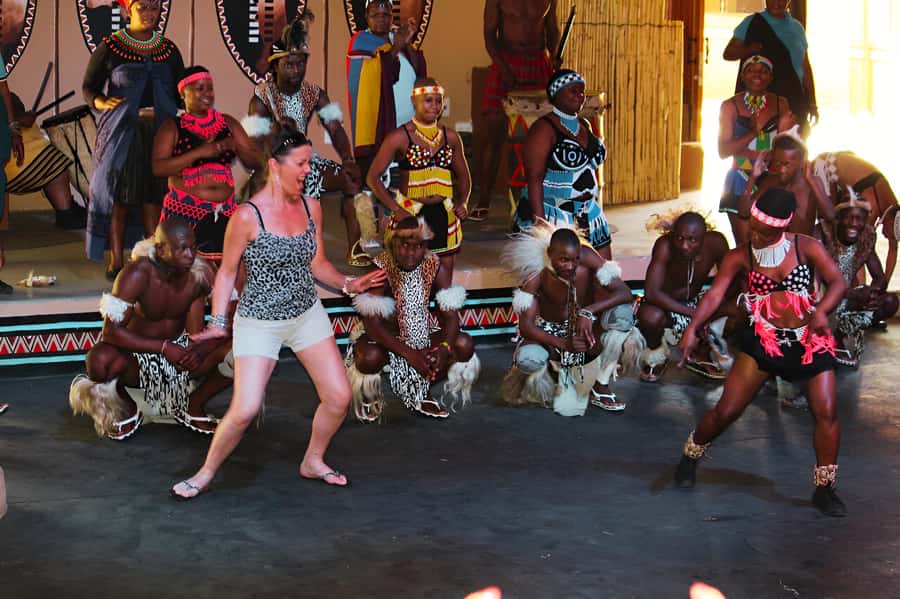
You may also be encouraged to participate in simple dance steps or craft activities during the visit. I like that option because it changes your role from passive observer to willing participant. You do not need to perform well. A little good humor is enough.
If you prefer museums, long historical explanations, or self-guided visits, the show may feel too dominant. Lesedi’s strongest language is performance, so choose it for music and movement first, then add the cultural explanations around that.
Lunch or dinner with South African flavors
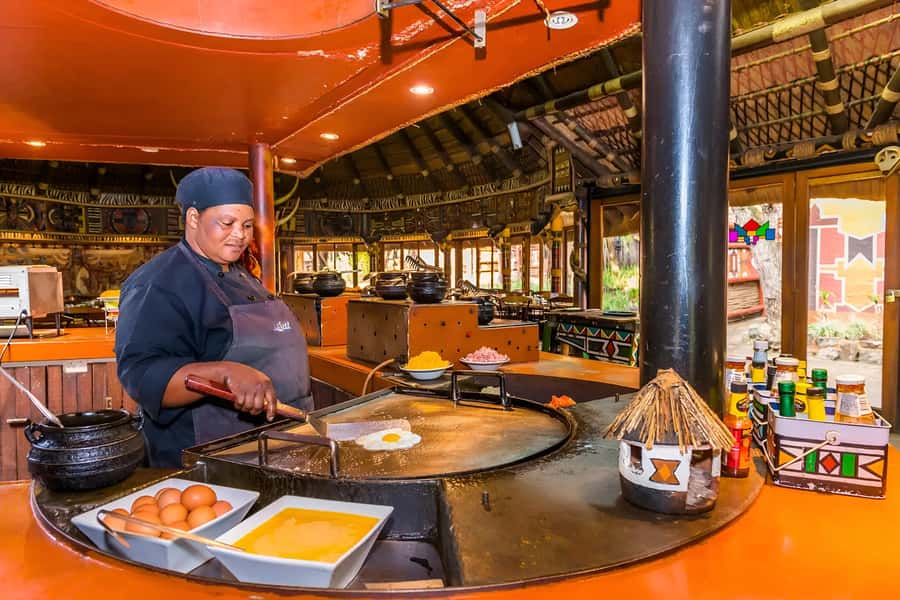
After the guided program, you have about an hour for lunch or dinner. Food is included in the price, while drinks are not.
The meal may include traditional South African dishes such as pap, chakalaka, and meat prepared in traditional ways. Pap is a maize-based staple, while chakalaka is a spicy vegetable relish. These dishes give you a chance to connect the cultural talk with something practical and familiar: what people eat, share, and serve.
The meal also gives the day a sensible rhythm. Two and a half hours of touring, music, demonstrations, and explanation can be a lot to absorb. Sitting down afterward lets you process what you have seen instead of rushing straight back to the coach.
One recent French-language review described the meal positively, so I would count the included food as a useful part of the package. Still, remember that drinks are separate. If you are budgeting closely, allow extra money for beverages and any purchases at the marketplace.
The marketplace is another chance to buy crafts, clothing, and souvenirs made by local artisans. I would browse before committing to a purchase and ask about the item if you want to understand what it represents. Personal purchases are not included, but buying something can support the craft side of the attraction.
Is $143 good value for five hours?
At $143 per person, this is not a bargain-priced outing. The value depends on how much you would otherwise spend arranging transport, entrance, a guide, performances, and a meal separately.
Here, entrance fees, food, live guiding, and pickup and drop-off around Johannesburg or Pretoria are included. That makes the price easier to justify for a first-time visitor who wants a simple, organized half-day experience.
The cost also covers access to five cultural presentations in one place. If you are staying in Johannesburg or Pretoria and have limited time, that concentration is useful. You can learn the basic distinctions between several groups without making multiple long journeys.
The price feels less convincing if your main goal is an unplanned, everyday encounter with local life. The reconstructed homes and performed scenes are intentionally arranged, and one visitor felt they seemed made mainly for international tourists.
My value judgment is this: book it if you want structure, transport, live entertainment, and a meal in one package. Skip it if you dislike staged attractions or would rather spend the money on a smaller, discussion-based cultural visit.
Who will enjoy this half-day outing?
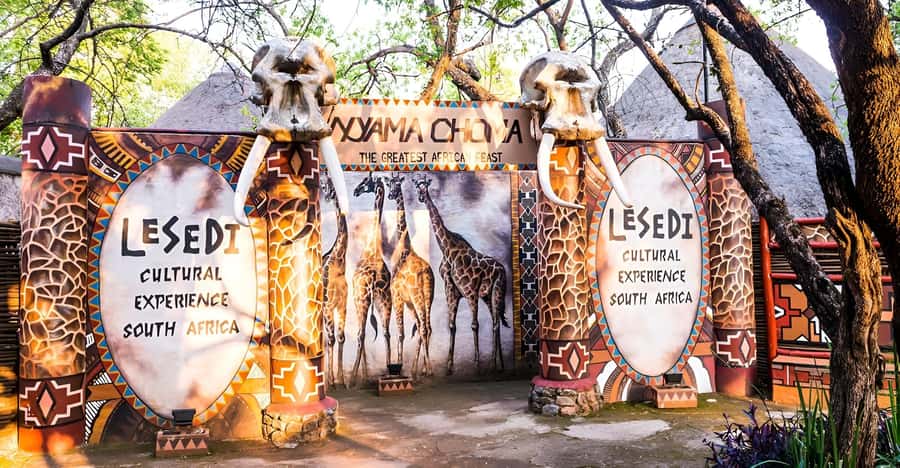
I think Lesedi suits first-time visitors to South Africa, families, and anyone who wants a clear introduction without complicated logistics. The variety keeps the pace moving, and the music makes the cultural material accessible to people who may not normally choose a heritage tour.
It also works well for mixed groups. One person can enjoy the history and customs, another can focus on photography and architecture, and someone else can simply enjoy the dancing and food.
The multilingual guiding helps international groups. English, Portuguese, and French are offered, and translation pauses can make a real difference.
You may want to choose another type of experience if you prefer independent exploration, small informal groups, or detailed academic history. Lesedi is polished, visual, and audience-focused. That is its strength, and also its limit.
The tour is wheelchair accessible, which makes it a practical option for more visitors. Since the total duration is five hours, including transport, it also avoids the commitment of a full-day excursion.
Practical details that shape the day
The full schedule is about five hours:
- About 45 minutes by coach from Johannesburg or Pretoria
- About two and a half hours for the village visit and guided cultural tour
- About one hour for lunch or dinner
- About 45 minutes back to Johannesburg or Pretoria
The start time varies, so check availability before booking. Pickup and drop-off are included around both cities, but you should confirm the exact meeting details for your hotel.
You can cancel up to 24 hours in advance for a full refund, and the reserve-now, pay-later option keeps your plans flexible. The tour also offers skip-the-ticket-line access.
African Pumba Tours operates the experience. Strong guiding matters here, so if Samuel is leading your group, expect extra explanation and attentive help based on the praise he has received. Guides who speak French or Portuguese can also improve the day for non-English speakers.
Should you book Lesedi Cultural Village?
Book this tour if you want a lively, well-organized introduction to five South African cultural traditions, especially if you are based in Johannesburg or Pretoria and want transport included. The singing, drumming, dance, friendly staff, and meal give the five-hour outing a good sense of occasion.
Go with realistic expectations. You will see reconstructed homes, demonstrations, explanations, and performances created for a public audience. The experience can teach you useful basics, but it is not an untouched village visit and may feel artificial to visitors seeking everyday life.
For most first-time visitors, I would consider Lesedi a worthwhile orientation. The dance performance is the clear high point, and the included meal and transfers help balance the $143 price. Just listen for context, ask questions when you can, and treat the program as a welcoming introduction rather than a complete picture of South Africa.
FAQ
Where is Lesedi Cultural Village located?
Lesedi Cultural Village is in the North West province of South Africa.
How long does the experience last?
The full experience lasts about five hours, including transport from Johannesburg or Pretoria.
Is hotel pickup included?
Yes. Hotel pickup and drop-off around Johannesburg and Pretoria are included at no extra cost.
How long is the drive to Lesedi Cultural Village?
The bus or coach journey takes about 45 minutes each way.
Which cultural groups are included?
The tour presents Zulu, Xhosa, Pedi, Sotho, and Ndebele cultures.
Is food included?
Yes. Lunch or dinner is included, depending on the scheduled experience. Drinks are not included.
What languages are available?
Live tour guides are available in English, Portuguese, and French.
Is the tour wheelchair accessible?
Yes, the activity is described as wheelchair accessible.
Can I cancel for a full refund?
Yes. You can cancel up to 24 hours in advance for a full refund.
More Lunch Experiences in Johannesburg
- Soweto: Walking Tour with a Local Guide and Lunch
★ 4.9 · 648 reviews - Full-Day Soweto, Apartheid Museum and Lunch Tour
★ 5.0 · 410 reviews - Soweto: Guided Bicycle Tour with Lunch
★ 4.9 · 292 reviews - Soweto Walking Tour with Lunch
★ 5.0 · 288 reviews
More Places to Eat in Johannesburg
- 4-Day Kruger Park Safari & Panoramic Tour Combo including Breakfast and Dinner
★ 5.0 · 19 reviews - 3-Day Kruger National Park Safari including Breakfast and Dinner
★ 4.5 · 19 reviews - 4-Day Kruger National Park Safari including Breakfast and Dinner
★ 5.0 · 12 reviews - Zulu Food Cooking & Dining Experience with a local Chef
★ 4.4 · 5 reviews
Just added in Johannesburg
- 5 Day Kruger National Park tour★ 5.0 · 13 reviews
- 4-Day Kruger Park Safari & Panoramic Tour Combo including Breakfast and Dinner★ 5.0 · 19 reviews
- 4 Day Lodge and Treehouse Kruger National Park Safari★ 4.5 · 33 reviews
- 4-day Soweto & Pretoria, Lion Park, Magalies/Pilanesberg Safari★ 5.0 · 2 reviews
- 4-Day Kruger National Park Safari including Breakfast and Dinner★ 5.0 · 12 reviews
- 4 Day Kruger National Park and Panorama Tour from Johannesburg★ 5.0 · 4 reviews
- 4-Day Kruger National Park & Panorama Route Tented Safari★ 5.0 · 2 reviews
- 4-Day Kruger National Park Safari from Johannesburg★ 5.0 · 24 reviews
Cultural Village Tours, compared.
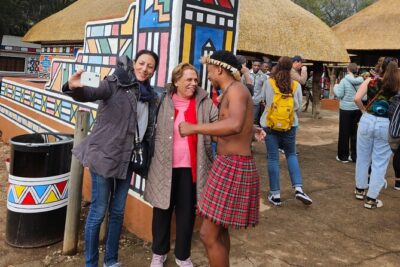
Lesedi Cultural Village and Cradle of Humankind Tour
Read our review →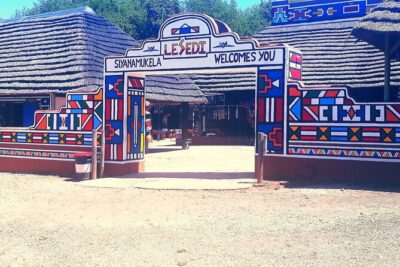
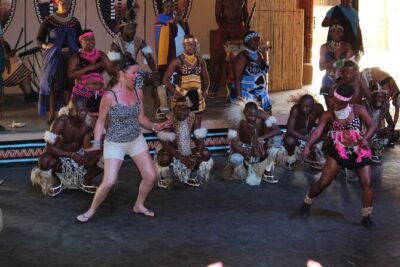
Durban City & PheZulu Cultural Village Day Tour from Durban
Read our review →
Phezulu Cultural Village & Reptile Park Day Tour from Durban
Read our review →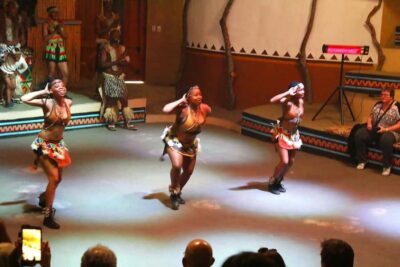
Browse the lists this tour appears in