
REVIEW · WALKING TOURS
LocalPlaces Understanding Johannesburg Walking Tour
Johannesburg makes more sense on foot. The LocalPlaces Understanding Johannesburg Walking Tour traces the city from its gold rush beginnings through Edwardian prosperity, urban decline, and today’s renewal. I like its clear storytelling and its focus on Marshalltown, the oldest part of the inner-city, where mining, finance, politics, and architecture meet.
I also like the unusual details, from Gandhi’s early legal work to the stained-glass interior of an abandoned stock exchange. Guide Charlie is praised as a lively storyteller, a useful sign if you want history delivered with personality rather than a dry list of dates. The main consideration is that this is a serious walking tour through a changing central district, so it may feel demanding or confronting if you prefer polished sightseeing areas.
In This Review
- Key points to know
- Why Marshalltown is the right place to begin
- Gold, money, and the making of a city
- Gandhi Square and the young lawyer behind the name
- Main Street and the old mining district
- The Shadow Boxer and Johannesburg’s political story
- The abandoned stock exchange and the power of atmosphere
- From decline to a changing central district
- What the four-hour format feels like
- Is $80.80 a fair price?
- Who will enjoy this walk most?
- Practical details before you book
- Should you book the Understanding Johannesburg Walking Tour?
- FAQ
- How much does the Understanding Johannesburg Walking Tour cost?
- How long does the tour last?
- What time does the tour begin?
- Where does the tour meet?
- Where does the tour end?
- Is this a private tour?
- Is the tour accessible by public transportation, and are service animals allowed?
- What happens if I need to cancel?
Key points to know
- Marshalltown is the main event: You follow Johannesburg’s story through one of its oldest and most architecturally important districts.
- Gandhi Square adds a surprising link: The square recalls Gandhi as a young lawyer working in Johannesburg.
- The tour reaches beyond gold rush history: You hear about the city’s boom, Edwardian years, decline, and present regeneration.
- Architecture gets proper attention: Main Street, old financial buildings, and the abandoned stock exchange help make the past visible.
- It is a private experience: Only your group takes part, even though group discounts are available.
- Plan on about four hours: The listed start is 9:00 a.m., and the walk returns to its starting point.
Why Marshalltown is the right place to begin
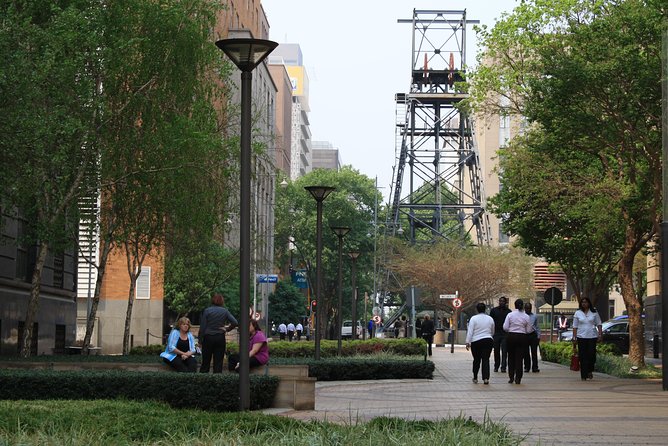
Johannesburg can seem like a city of separate pieces at first. Modern offices, old mining buildings, coffee shops, street art, neglected facades, and busy roads do not always appear to belong to the same story.
Marshalltown helps connect those pieces. This older section of the central business district is where Johannesburg’s mining and financial power took shape. The district still carries the marks of the gold rush, the Edwardian era, later decline, and recent efforts to bring activity back into the center.
That makes this a strong first tour. Instead of seeing one museum or landmark in isolation, you walk through the setting where the city’s fortunes changed. I like that approach because Johannesburg is not a place you understand from a single grand monument. Its story is spread across streets, squares, office buildings, sculptures, and public spaces.
The tour begins at 2 Pritchard Street at 9:00 a.m. From there, the walk heads into the older central district and eventually returns to the same meeting point. The exact walking route may vary with the guide, but the focus remains on Marshalltown and the surrounding historic core.
More Walking Tours in Johannesburg
- Soweto: Walking Tour with a Local Guide and Lunch
★ 4.9 · 648 reviews - Soweto Walking Tour with Lunch
★ 5.0 · 288 reviews - Johannesburg: Local Food Tasting Guided Walking Tour
★ 4.7 · 192 reviews
Gold, money, and the making of a city
The opening history sets up Johannesburg’s basic plot: gold brought rapid growth, and rapid growth created a city with money, ambition, and grand plans. The tour explains how mining companies and financial firms developed in Marshalltown, turning what had been a new mining settlement into a major commercial center.
You will look at the built evidence of that change. Older structures and street plans show how Johannesburg once presented itself as a serious business capital. The architecture is not just decoration here. It tells you who had money, which industries mattered, and how the city wanted to be seen.
The walk also covers the plush Edwardian period of the early 1900s. This is an important part of the experience because Johannesburg’s public image changed quickly during those years. Wealth from mining helped create more formal offices, commercial buildings, and civic spaces.
I appreciate tours that explain the gap between a city’s economic success and the buildings it leaves behind. In Marshalltown, prosperity is not an abstract idea. It appears in older facades, public squares, and commercial interiors. At the same time, the tour does not stop with the glory days. It follows the story into decline and regeneration, which gives you a more honest picture of central Johannesburg.
Gandhi Square and the young lawyer behind the name
Gandhi Square is one of the first important stops. The central Johannesburg square includes a sculpture of Gandhi as a young lawyer, and the guide explains that Gandhi worked here as a business lawyer early in his career.
That detail can surprise people who know Gandhi mainly from his later political life. The sculpture presents him before the familiar image of the older statesman, and the square gives the story a precise local setting.
The stop is short, about 15 minutes, but it works well as an introduction to Johannesburg’s many layers. The city’s history is not only about mining companies and office towers. It also includes the people, political movements, and legal institutions connected to the central district.
Because the tour starts from Gandhi Square, you get this context before moving farther into the streets. It is a helpful orientation point, especially if this is your first time in the inner-city.
The tour ends back at the original meeting point, so you do not need to arrange a separate pickup at the finish. That simple detail matters in a city tour, particularly when you are planning the rest of your day.
Main Street and the old mining district
From Gandhi Square, the route takes in pedestrianised Main Street in the corporate mining district. This is where the city’s financial and industrial past becomes especially clear.
Main Street also helps show the contrast between old Johannesburg and current Johannesburg. Historic buildings share space with coffee shops and eateries, creating a street that reflects the city’s effort to bring new life into older areas.
I like this part of the route because it does not treat regeneration as a clean replacement of the past. You see the older city still present, while newer businesses and public activity point toward its next chapter. That contrast is central to understanding Johannesburg today.
The walk includes historic landmarks such as the Mapungubwe-related site mentioned in the tour description, along with other locations tied to the city’s mining and commercial development. The guide’s role is important here. A building can look impressive, neglected, or ordinary until someone explains why it matters.
You should expect to spend much of the tour outside, looking closely at buildings and streets rather than moving from one indoor attraction to another. If architecture and urban culture interest you, this is a major strength. If you want a series of formal museum interiors, the format may feel less satisfying.
Something quite different:
- From Johannesburg: Pilanesberg Nature Reserve Game Safari
★ 4.8 · 1,327 reviews - Johannesburg: Hop-On Hop-Off Bus with Optional Soweto Tour
★ 4.6 · 985 reviews - Soweto /Johannesburg and Apartheid Museum Guided Full Day Tour
★ 5.0 · 932 reviews - Johannesburg Hop-On Hop-Off City Tour with Soweto Option
★ 4.5 · 768 reviews
The Shadow Boxer and Johannesburg’s political story
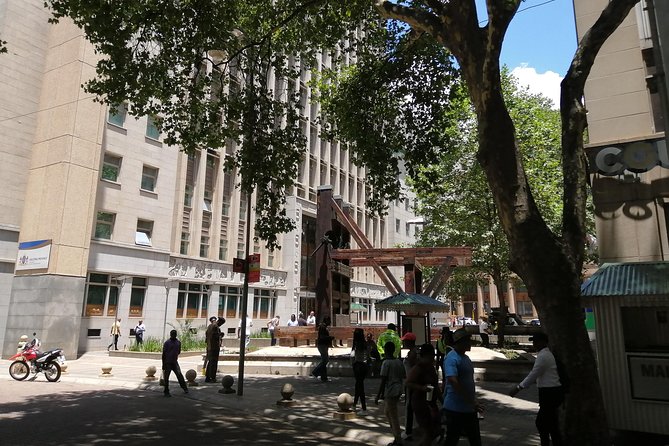
One of the more memorable sights is the Shadow Boxer sculpture. It marks the area where Nelson Mandela and Oliver Tambo once had offices.
The sculpture connects the physical center of Johannesburg with the political history of South Africa. It is a small but useful reminder that the inner-city was not only a place of commerce. It was also a place where lawyers worked, political ideas developed, and important personal partnerships took shape.
The location tied to Mandela and Tambo adds human scale to a large national story. You are not simply hearing about famous names from a distance. You are looking at a site connected to their working lives.
This is also where Charlie’s storytelling style could make a difference. The available feedback describes him as a lively raconteur, and one especially valued the way he brought the city’s past to life. That matters on a walking tour, where the quality of the explanation can shape how much you notice.
The Shadow Boxer stop is not presented as a grand monument with a long museum visit. It is part of the street experience. You pause, take in the sculpture and its setting, then continue through the district.
The abandoned stock exchange and the power of atmosphere
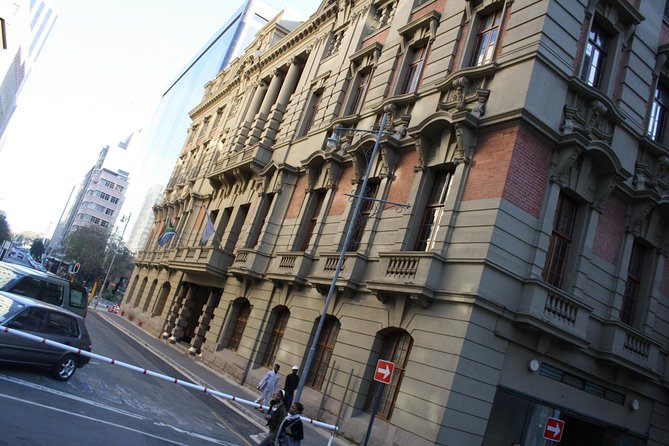
The most distinctive architectural detail in the tour may be the chance to go inside an abandoned stock exchange with stained-glass windows. That combination says a great deal about old Johannesburg: financial power was once given a highly finished, almost ceremonial setting, yet the building later fell out of regular use.
This stop helps explain why the tour feels different from a standard city-center walk. You are not only looking at restored landmarks. You are also confronting the marks of abandonment and change.
The stained glass is a particularly useful detail because it makes the old commercial world tangible. A stock exchange sounds like a place of prices, deals, and mining shares. Stained-glass windows suggest another side of that world, one that wanted to project dignity, permanence, and success.
Access to such a building can depend on current conditions, so you should not treat every interior detail as guaranteed. Still, the site is a strong example of the kind of discovery this tour is built around: a place where architecture and urban history meet.
If you enjoy photography, the old financial buildings and shifting mix of occupied and empty spaces should give you plenty to notice. The tour is not designed as a photography outing, but its focus on architecture creates natural opportunities for close observation.
From decline to a changing central district
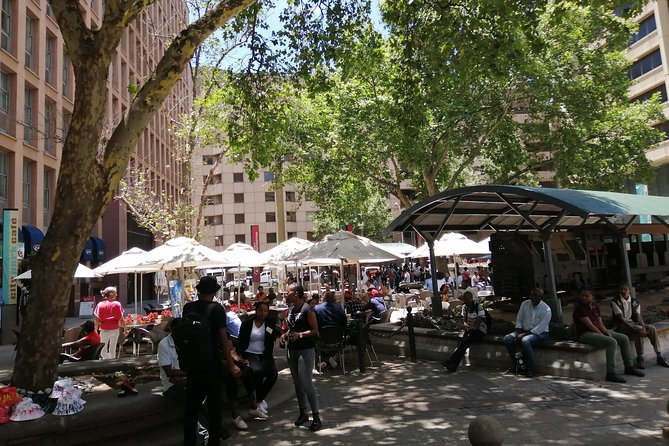
A lesser tour might present Johannesburg as either a former golden city or a troubled modern one. This experience aims for both sides of the story.
You hear about spectacular urban decline, but also about current regeneration. That balance is valuable because it keeps the city from becoming a simple before-and-after story. Johannesburg’s center has not merely vanished, nor has every problem been solved by new cafes and renovated buildings.
The tour’s contemporary angle comes through in places such as Main Street, where coffee shops and eateries now operate among older commercial structures. These businesses show renewed activity, but the older architecture keeps the city’s earlier chapters visible.
I like that the walk gives you a way to read those contrasts. A handsome Edwardian facade may represent wealth from the mining era. A quiet or neglected building may point to later shifts in the central economy. A newer cafe may suggest investment and changing habits. The guide connects those clues so you can interpret the streets for yourself afterward.
This is also why the tour works best near the beginning of a Johannesburg visit. After four hours, you should have a stronger sense of how the inner-city developed and why it looks the way it does. You may not know every neighborhood, but you will have a framework for placing what you see elsewhere.
What the four-hour format feels like
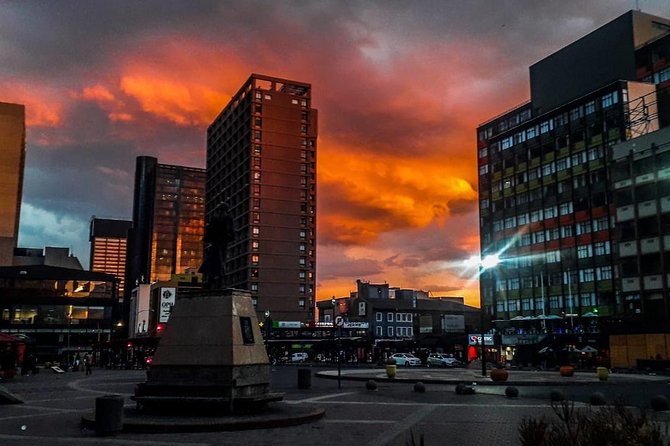
The experience lasts approximately four hours, though one itinerary section lists about three hours for the main Marshalltown portion. Either way, plan your morning around a substantial walk rather than a quick orientation.
The 9:00 a.m. start is practical. It gives you the rest of the day for another activity, but you should arrive ready to spend several hours on foot. Wear comfortable shoes and bring whatever you normally need for a morning outside. The supplied information does not specify the walking distance, so I would not plan a tight appointment immediately afterward.
The tour is private, meaning only your group participates. That is a real advantage if you want to ask questions, pause at a building, or keep the pace suited to your party. It also makes the experience more personal than a large group walk.
A private format does not guarantee a completely customized route. The core subject remains the history and present character of Marshalltown. Still, you should have more room for conversation than you would on a crowded public tour.
The tour is offered with a mobile ticket, and confirmation is received when you book. It is near public transportation, and service animals are allowed. Most people can participate, but the experience does require walking through the central district and good weather.
Is $80.80 a fair price?
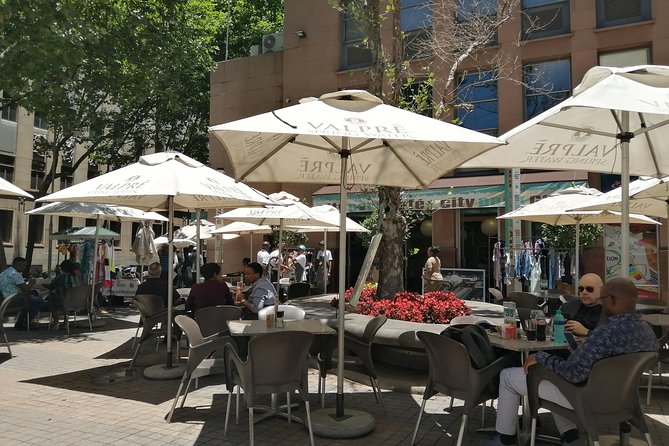
At $80.80 per person, this is not a bargain-priced stroll. The value depends on what you want from a Johannesburg introduction.
If you only want to see a few central landmarks, the cost may feel high. You could visit Gandhi Square and walk parts of Main Street without paying for a guide. But that would leave you to connect the mining boom, Edwardian architecture, Gandhi’s legal work, Mandela and Tambo, urban decline, and regeneration on your own.
I see the price as easier to justify if you value interpretation and a private setting. The tour is built around the story linking the places together, not simply the number of sights. The chance to enter an old stock exchange, with its stained glass, adds a memorable architectural element when access is available.
Group discounts may improve the value for families or friends traveling together. Since only your group participates, the cost may also make more sense when divided among several people who want a focused introduction to the city.
The tour is booked, on average, about 15 days in advance. That does not guarantee that every date sells out, but it suggests you should include it in your plans early, especially if you want a particular morning.
Who will enjoy this walk most?
I would recommend it first to people interested in history, architecture, politics, and urban change. It suits you if you like to understand why a city looks the way it does rather than simply checking off famous sights.
It is also a good match for first-time visitors who want a strong introduction to Johannesburg’s inner-city story. The route covers enough time periods to give you useful context without limiting the discussion to the gold rush.
The tour may appeal less if you dislike long walks, prefer air-conditioned attractions, or want a tour centered on food and shopping. Coffee shops and eateries appear along Main Street, but this is not primarily a tasting experience.
The changing character of the district is part of the point. You should be comfortable with a city center that includes both attractive historic buildings and signs of decline. That contrast is not a flaw in the tour. It is one of the subjects the guide is there to explain.
Practical details before you book
Meet at 2 Pritchard Street, Johannesburg, 2113, South Africa, at 9:00 a.m. The activity returns to that meeting point, so you can plan transportation more easily than with a tour that ends across town.
The experience is private, and group discounts are available. Most people can take part, and service animals are permitted. Since the tour requires good weather, poor conditions can lead to a new date or a full refund.
You can cancel for a full refund up to 24 hours before the start time. Cancellations or changes made less than 24 hours before the experience are not refunded or accepted, and the cut-off uses local time.
The tour also requires a minimum number of participants. If that minimum is not met, you are offered another date or experience, or a full refund.
Should you book the Understanding Johannesburg Walking Tour?
Book it if you want Johannesburg explained through its streets. The strongest parts are the Marshalltown focus, the clear journey from gold rush success to urban decline and renewal, and the architectural details, especially the old stock exchange with stained-glass windows.
I would choose this as an early Johannesburg activity, not a final-day filler. It gives you a useful map of the inner-city and helps you recognize the meaning behind places such as Gandhi Square, Main Street, and the Shadow Boxer sculpture.
Skip it if you want a short, easy stroll or a tour devoted mainly to restaurants and shopping. But if history, architecture, and urban culture are your interests, the private format and strong storytelling make the $80.80 price easier to defend. Charlie’s lively delivery, when he is your guide, should add welcome energy to a subject that could otherwise become a list of dates and buildings.
FAQ
How much does the Understanding Johannesburg Walking Tour cost?
The price is $80.80 per person. Group discounts are available.
How long does the tour last?
The experience lasts approximately four hours. The Marshalltown portion is listed as about three hours, with a 15-minute stop at Gandhi Square.
What time does the tour begin?
The tour starts at 9:00 a.m.
Where does the tour meet?
The meeting point is 2 Pritchard Street, Johannesburg, 2113, South Africa.
Where does the tour end?
The activity ends back at the meeting point.
Is this a private tour?
Yes. Only your group participates in this private activity.
Is the tour accessible by public transportation, and are service animals allowed?
The meeting area is near public transportation, and service animals are allowed.
What happens if I need to cancel?
You can cancel at least 24 hours before the start time for a full refund. Cancellations or changes made less than 24 hours before the start time are not accepted and are not refunded. Poor weather or failure to meet the minimum number of participants may result in another date or a full refund.
Just added in Johannesburg
- Johannesburg Culture and food tour★ 4.5 · 3 reviews
- Johannesburg Apartheid Museum and Soweto★ 5.0 · 14 reviews
- Pretoria, Soweto and Apartheid Museum Guided Day Tour from Johannesburg Private★ 4.0 · 4 reviews
- Johannesburg Like a Local: Customized Private Tour★ 5.0 · 3 reviews
- Ultimate Johannesburg Soweto Experience with Apartheid Museum★ 5.0 · 13 reviews
- Johannesburg City Evolution, Arts and Museums Walking Tour★ 5.0 · 8 reviews
- Downtown Johannesburg Tuk tuk Tour with a local lunch★ 4.5 · 12 reviews
- Experience Johannesburg Wine Tour Views and Luxury★ 5.0 · 2 reviews
Walking Tours, compared.




Browse the lists this tour appears in